
A PRP hair treatment using your own platelet-rich plasma, injected into the scalp to revive dormant follicles, strengthen existing hair and slow shedding. Non-surgical, no downtime.
Real patient results from our London clinic, tracked with clinical photography across a course of treatment.
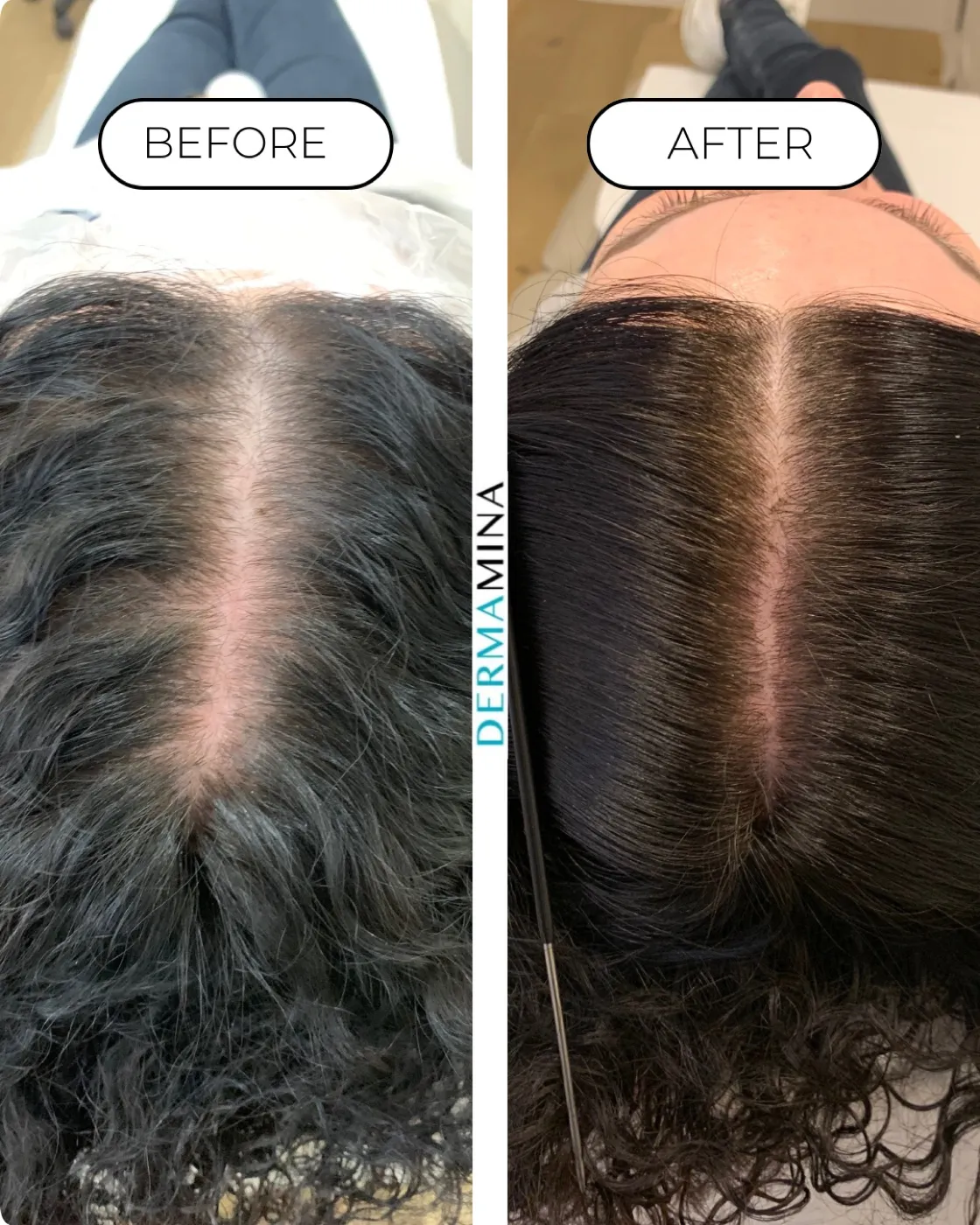
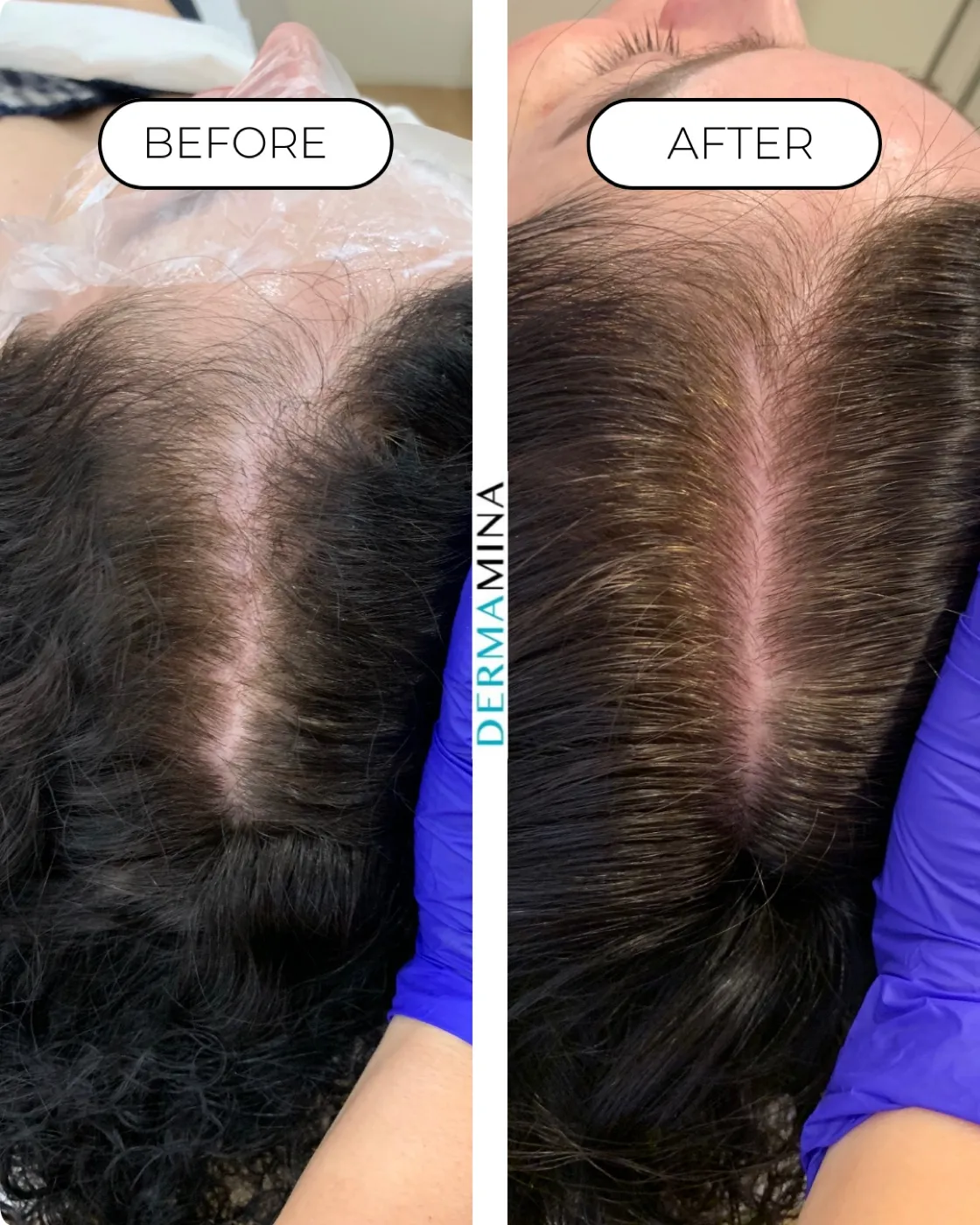
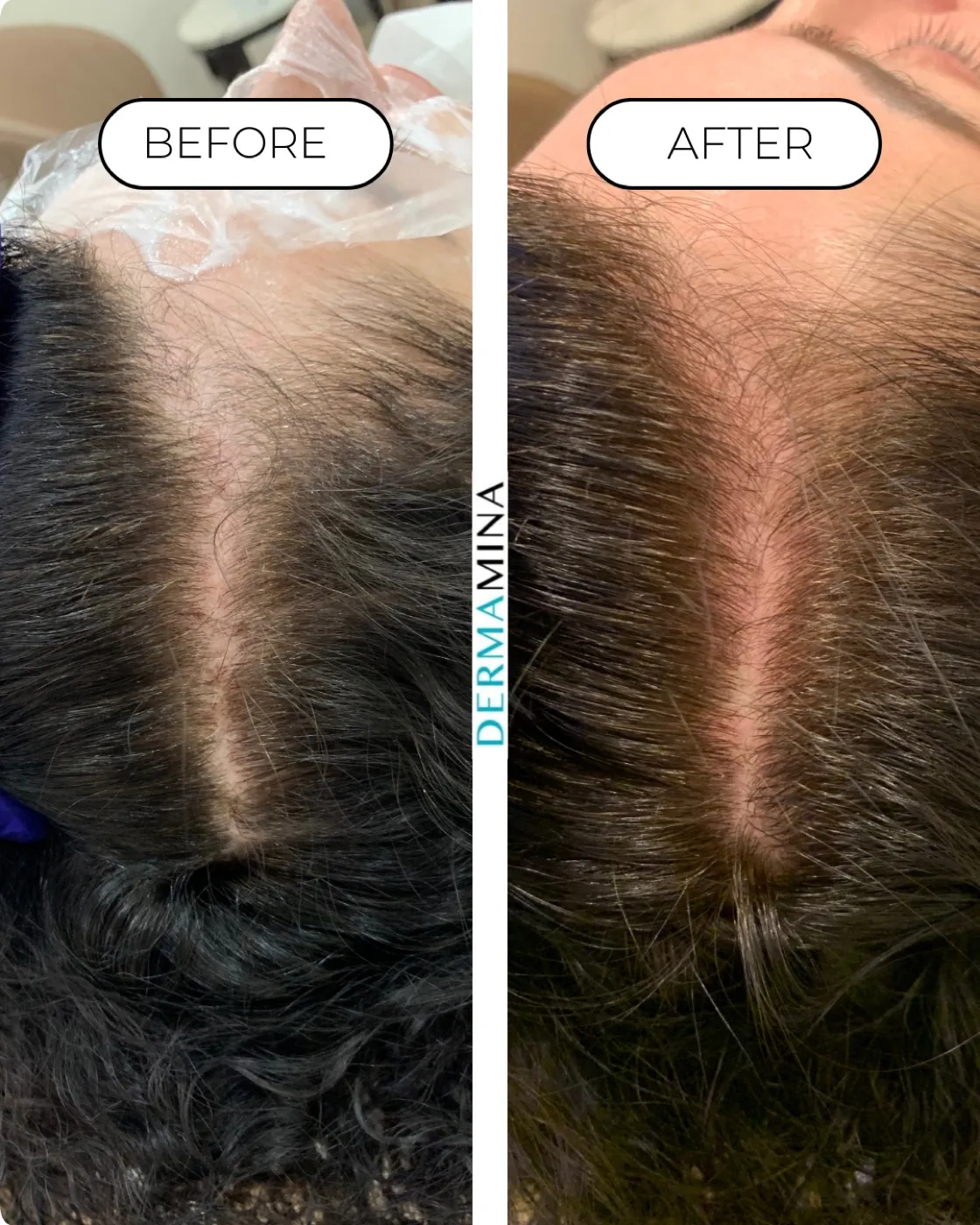
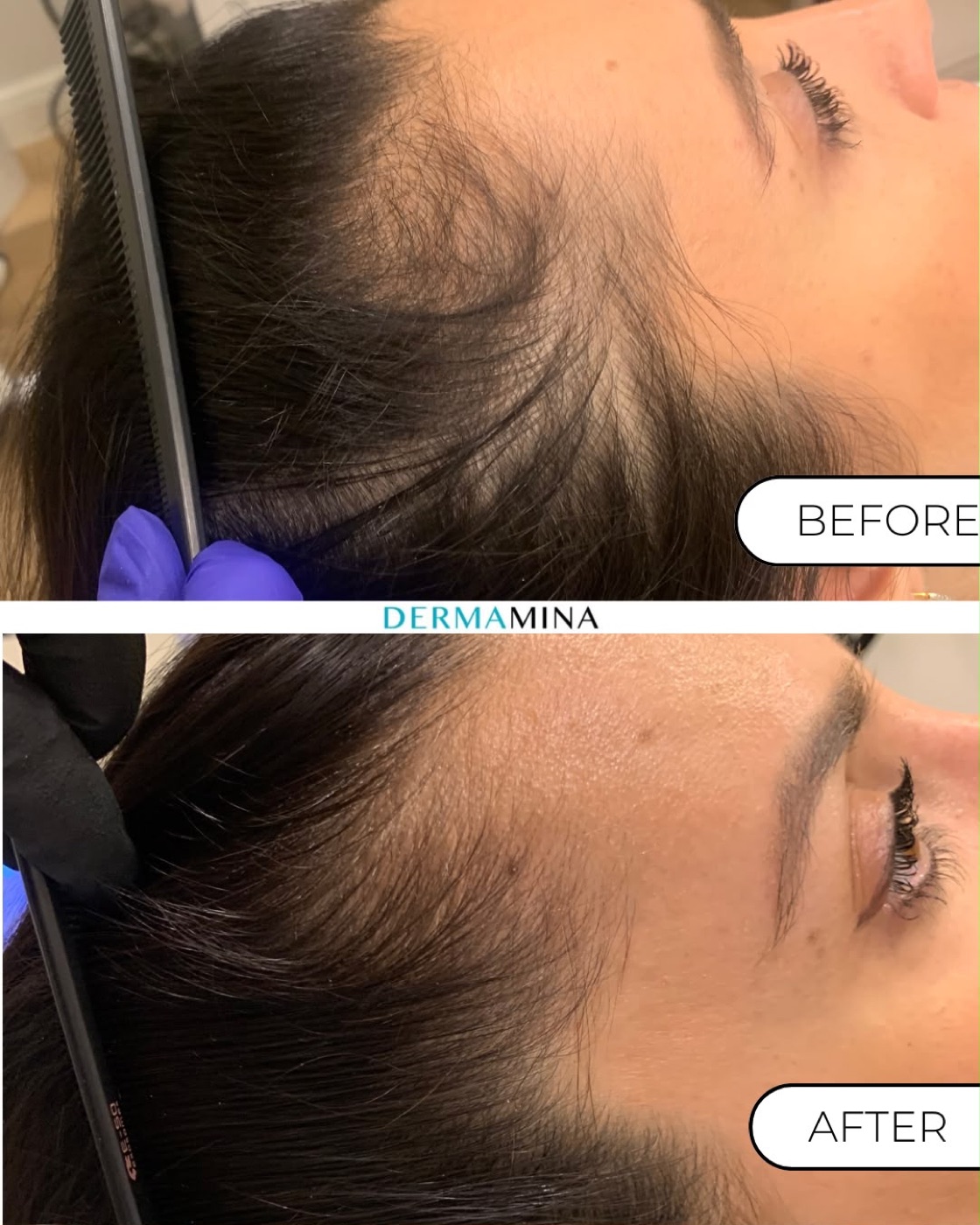
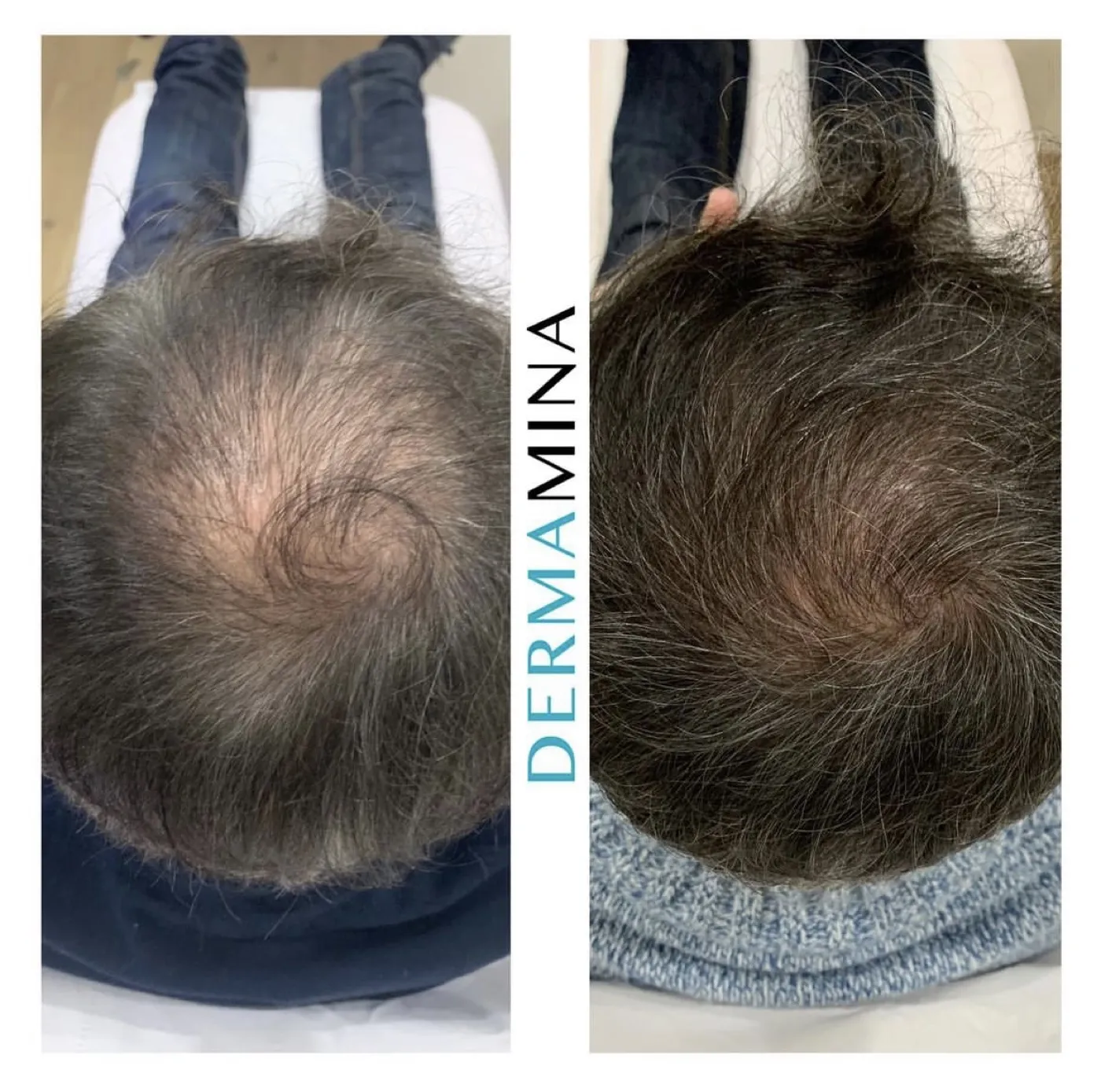
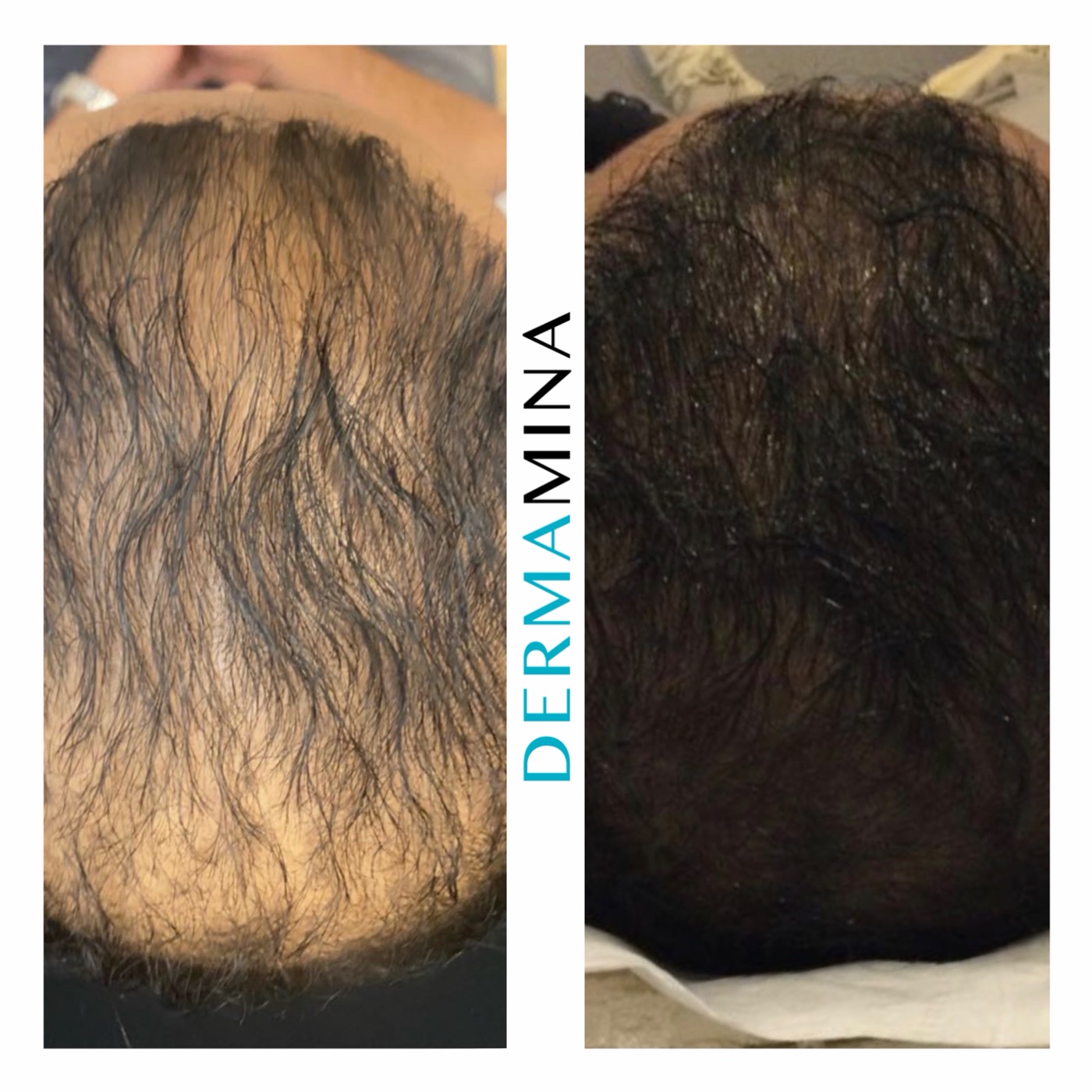
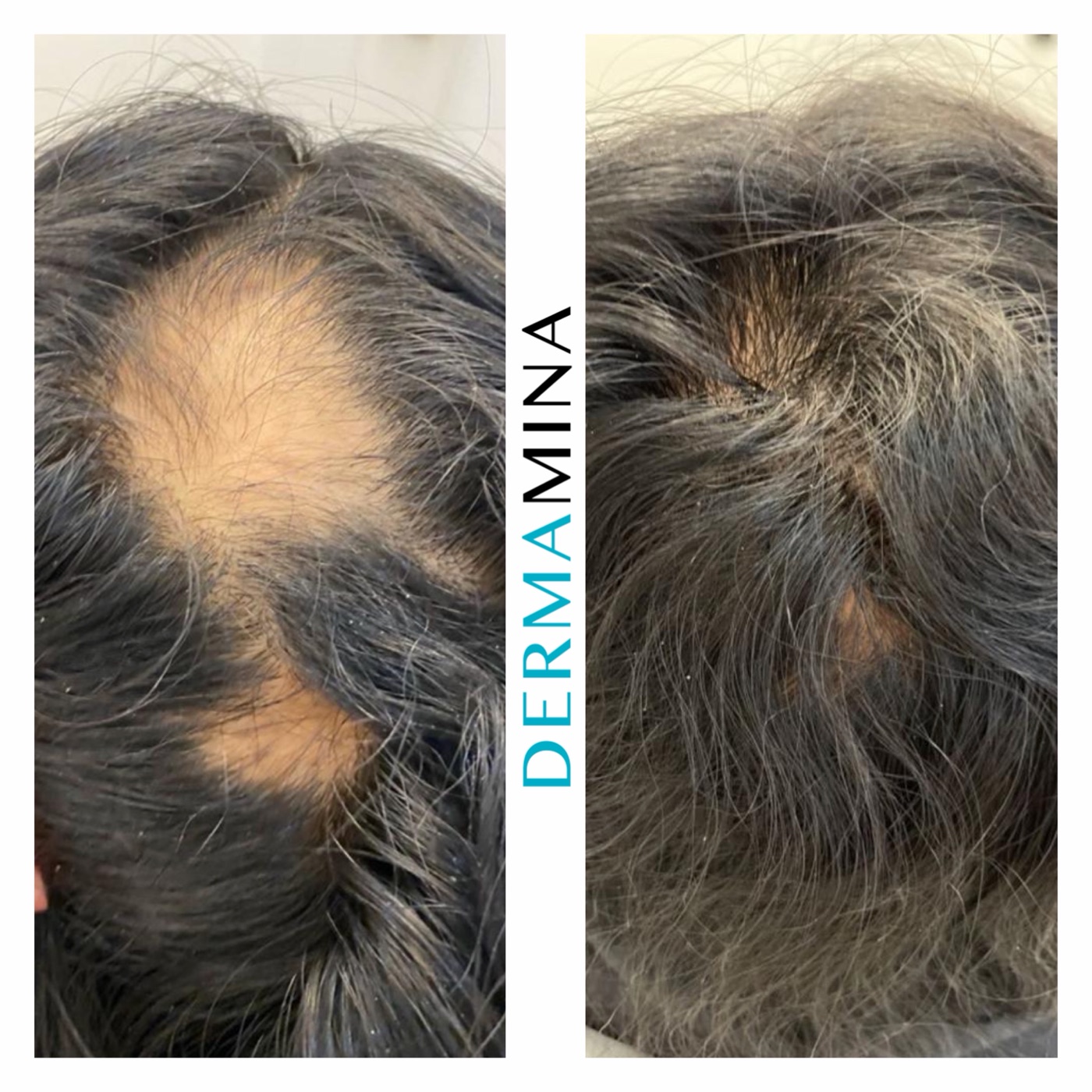
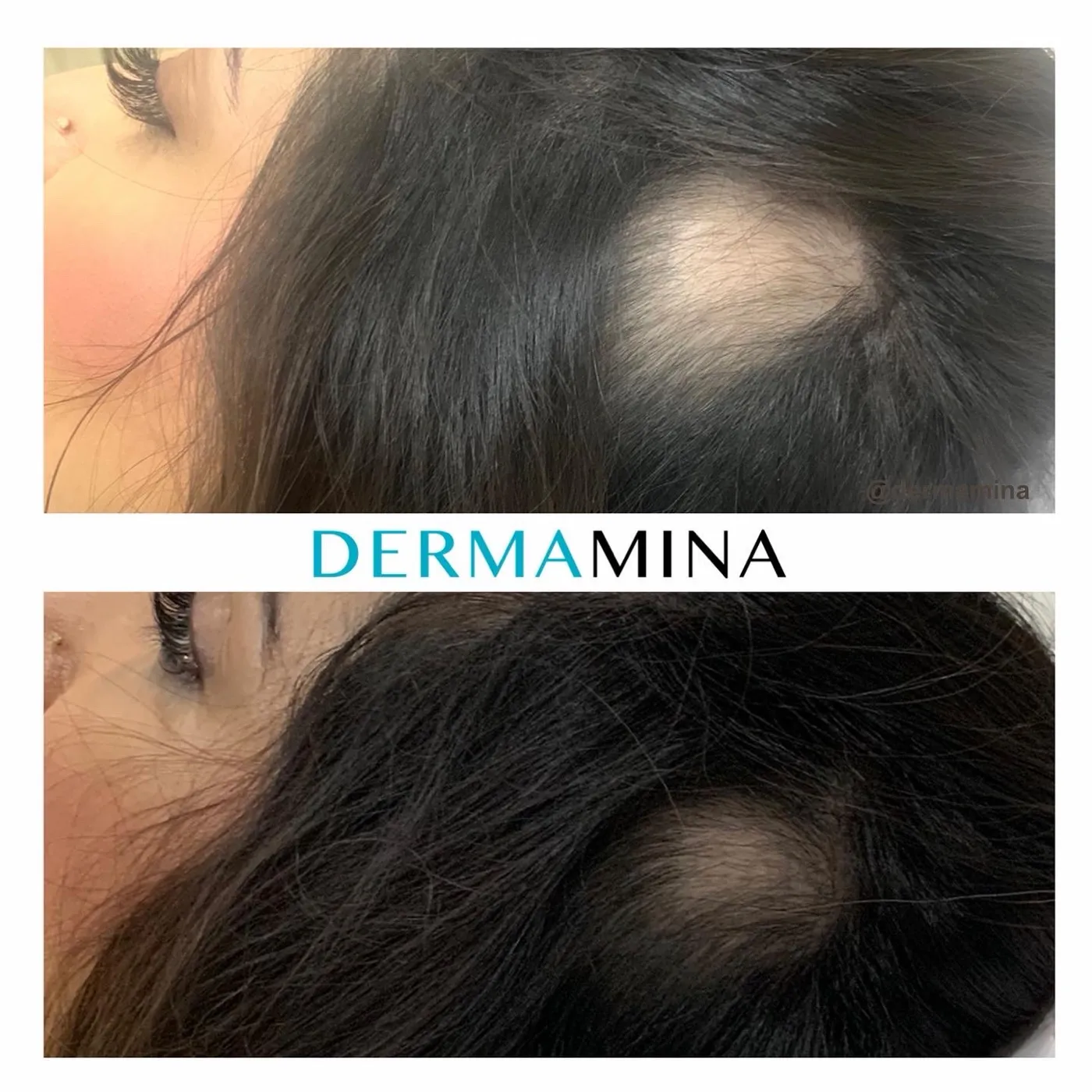
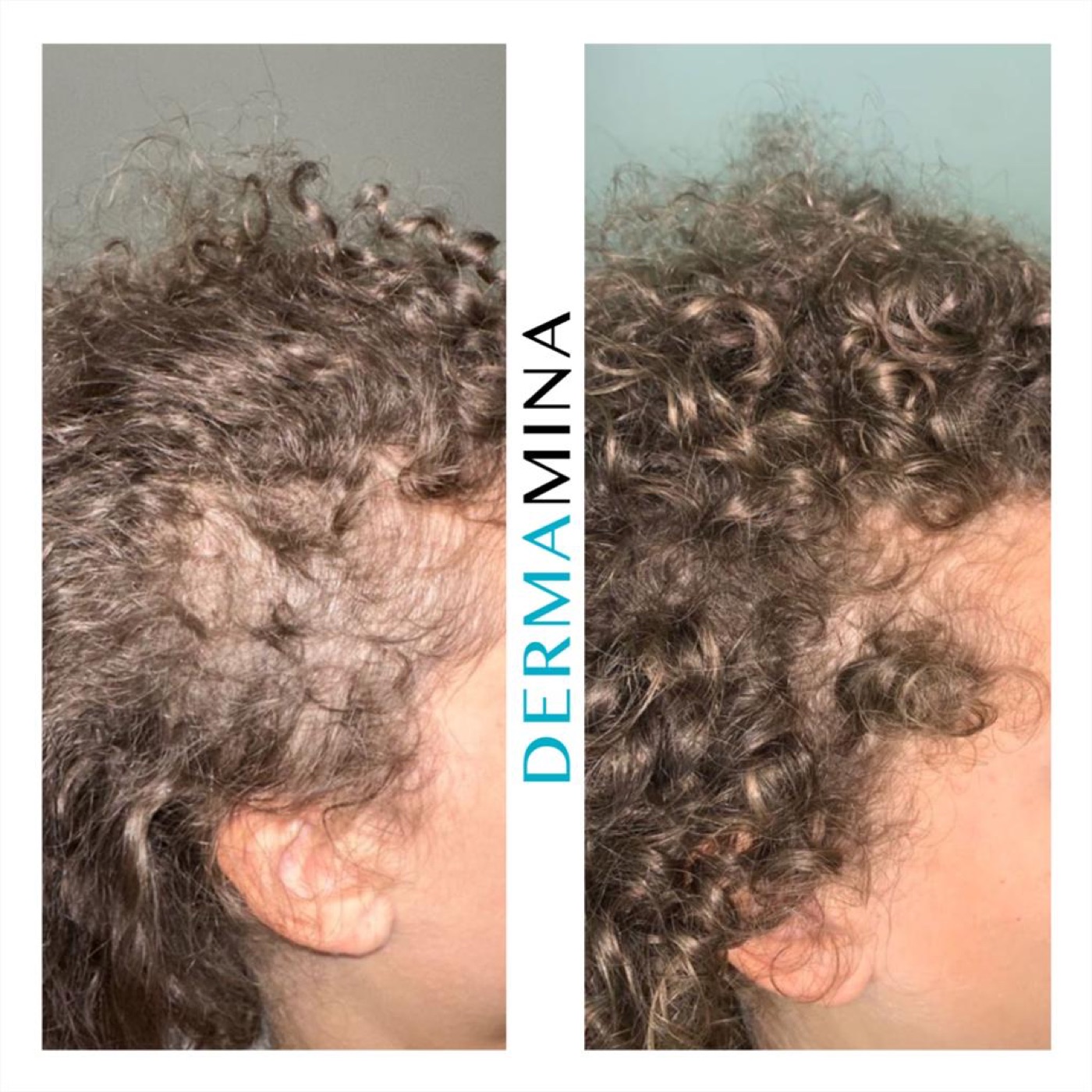
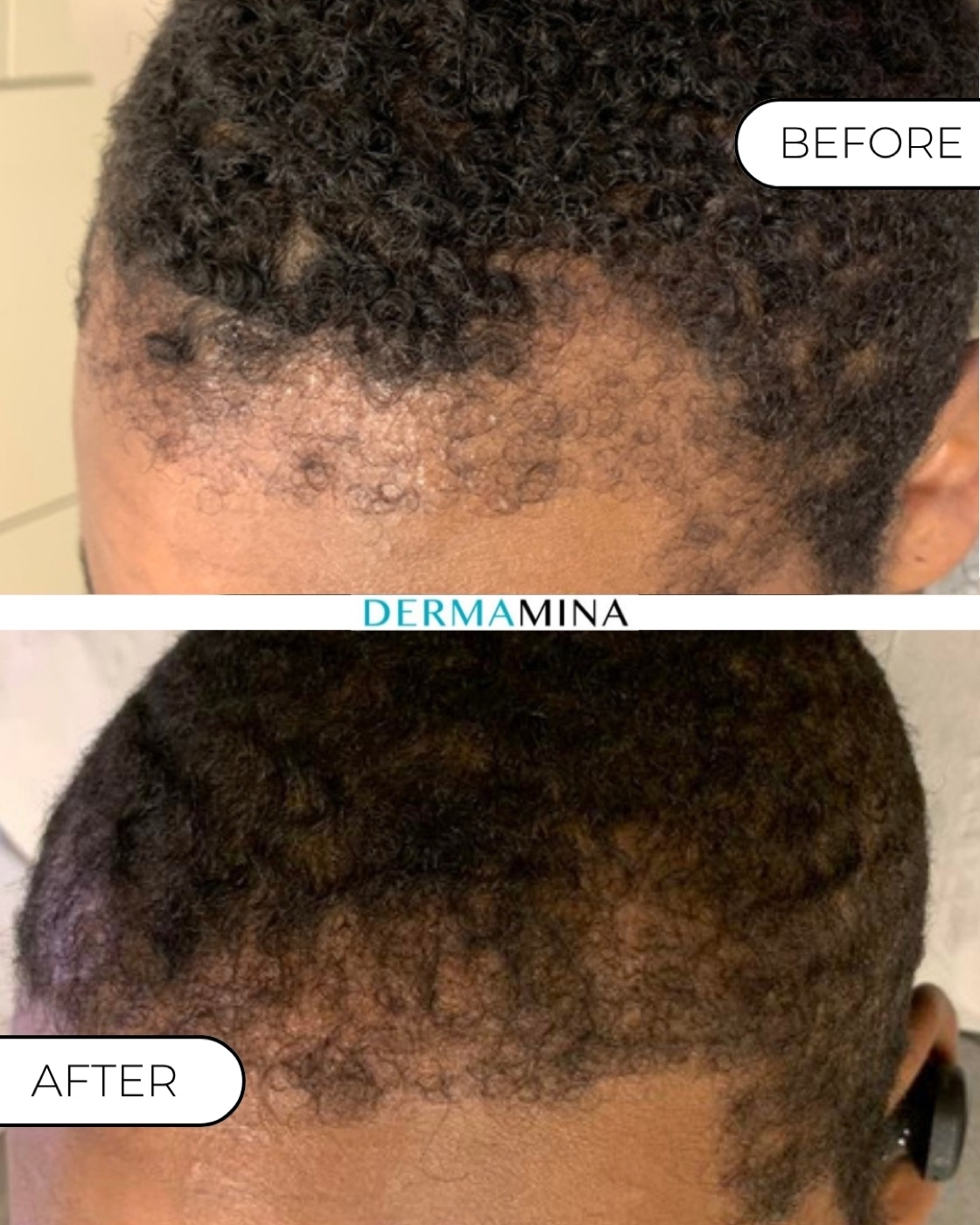
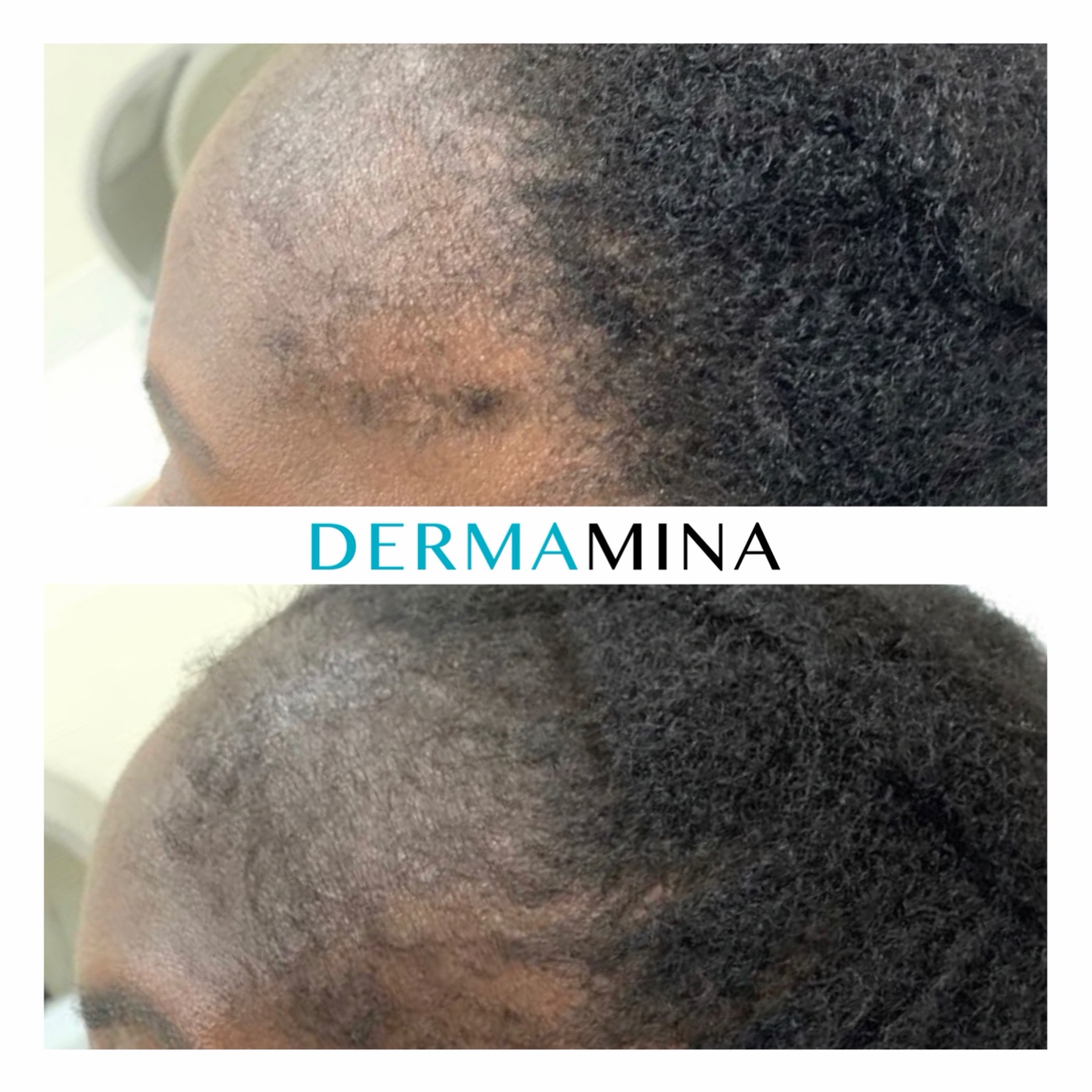
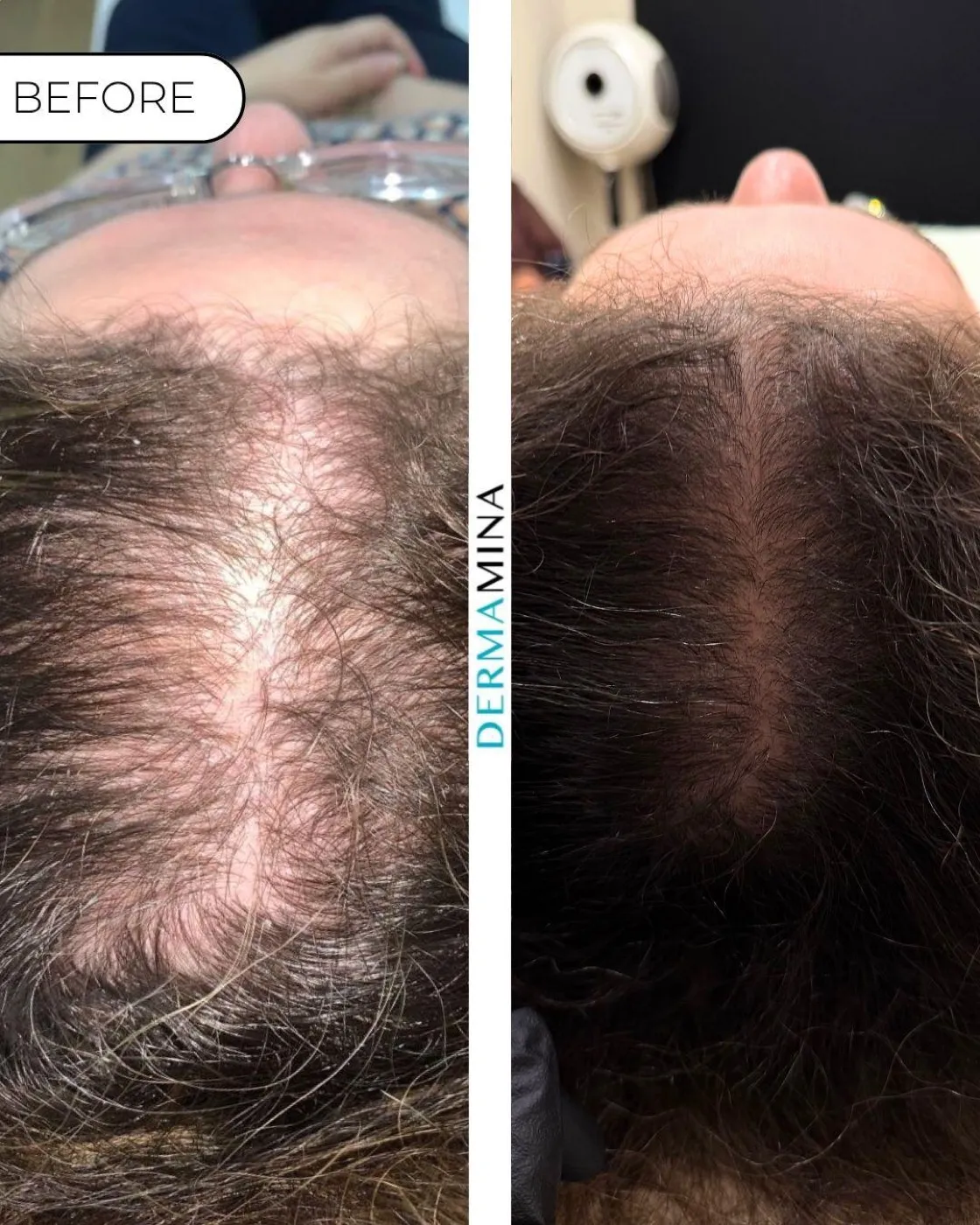
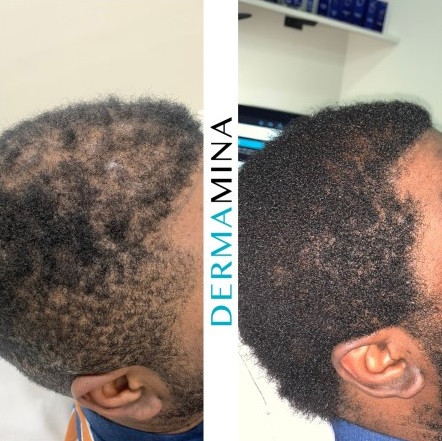
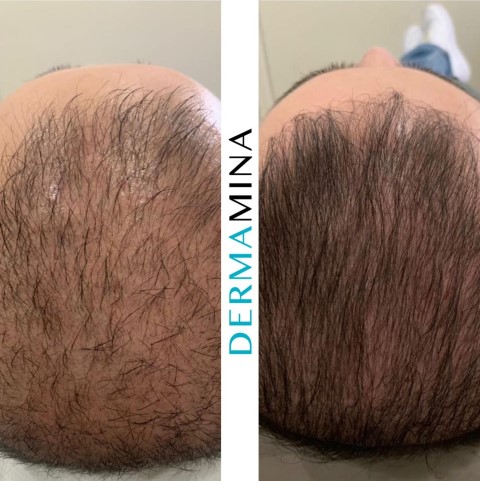
Results shown across the crown, parting, temples and hairline in men and women · Rated 4.9 / 5 from over 2,000 reviews
“I had an amazing experience with the PRP hair treatment at Dermamina. The service was truly five stars from start to finish. They are very professional, attentive, and made me feel completely at ease. I highly recommend Dermamina to anyone considering this treatment!”
PRP uses a small sample of your own blood. The plasma is separated, concentrated and injected into thinning areas of the scalp to stimulate and strengthen hair follicles.
The plasma is enriched with growth factors including TGF-beta, PDGF-AB, bFGF, IGF, VEGF and EGF, alongside proteins such as globulin, albumin and fibrinogen, plus vitamins, minerals and hormones. Together these encourage faster repair and regeneration of tissue. Isolating the plasma removes the red and white blood cells, leaving behind the components that actually drive hair restoration.
In practice the therapy does two things: it improves the thickness and strength of the hair you still have, and it helps slow further shedding. Most patients notice changes within three months, with improvement continuing over six months or more. Because it uses your own blood, there is no risk of allergic reaction or disease transmission.
Results have been observed in both men and women with androgenetic alopecia and alopecia areata, and it is a common choice after pregnancy. PRP can also be combined with other approaches: topical or oral treatments such as minoxidil and finasteride, hair transplant surgery, mesotherapy, exosomes or specialist supplements. At Dermamina we track progress with clinical photography and consultation reviews, so you can see what is actually changing.
Watch a PRP hair session at Dermamina, from the blood draw through to the scalp injections.
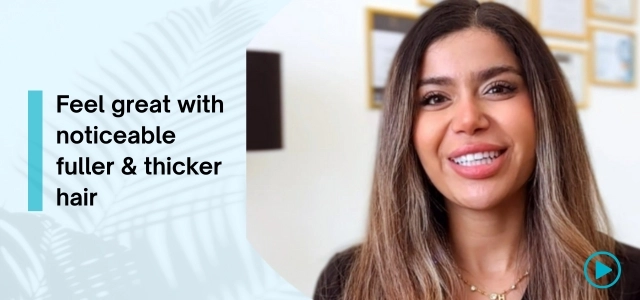
The video plays via YouTube when you press play.
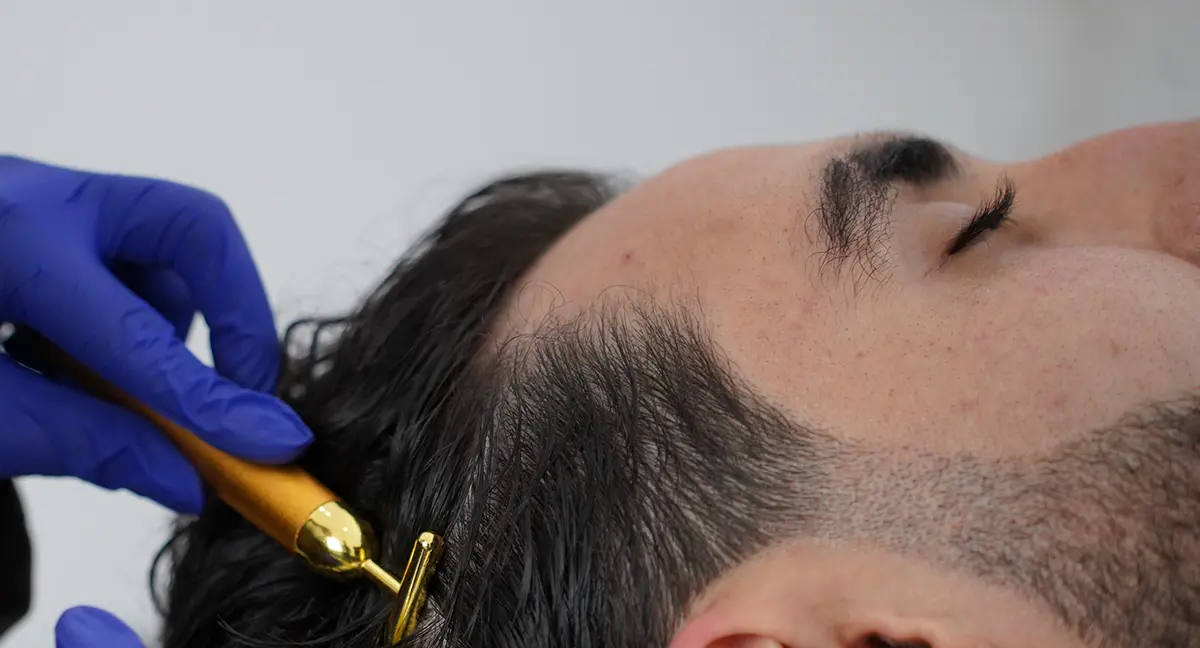
PRP works best while you still have active follicles. It is very effective on thinning hair and early-stage loss, and it cannot regrow hair on an area that is completely bald, because there is nothing left to stimulate. The earlier you start after noticing thinning, the better the outcome tends to be.
It also works best when the underlying cause is addressed alongside it. Hormonal imbalance, nutritional deficiency and certain medical conditions will keep driving hair loss regardless of how good the plasma is. That is why every course here starts with a hair analyser assessment and a proper consultation, not just a booking.
Book nowWe assess your scalp and hair with the hair analyser, take a full history and identify what is actually driving the loss. You get an honest view of whether PRP will help you, and a plan built around it. This assessment is free.
A small sample of blood is taken from your arm, exactly like a routine blood test. Eat a light meal and drink plenty of water beforehand to make this more comfortable.
The sample is spun in a centrifuge to isolate the platelets and growth factors. The concentrated plasma is then injected into the scalp in a precise pattern across the thinning areas. The whole appointment takes around 30 to 40 minutes.
Avoid washing your hair for the first 24 hours, and avoid vigorous exercise, swimming and strong sun exposure for a short period. Normal activities can be resumed the same day. If you have any tenderness, simple pain relief such as paracetamol is fine.
PRP suits most healthy adults with thinning hair or early-stage hair loss, and works for both men and women. It is not suitable for areas that are completely bald.
It is not right for everyone. PRP is not suitable if you have a blood disorder, an active scalp infection, or completely bald areas with no remaining follicles. A full consultation and hair analysis will confirm whether it is the right treatment for you.
Courses of six are 10% off the single-session price. Final pricing is confirmed at your free consultation, with no obligation to proceed.
Pay over 3, 6 or 8 months with Plim on treatments from £500. How our payment plans work

Every treatment is carried out in our Save Face accredited clinic on New Cavendish Street, five minutes from Oxford Street, by a medically qualified team.
Yes. PRP stimulates inactive hair follicles and improves blood flow to the scalp. The growth factors in your own plasma encourage follicles to produce stronger, thicker strands. Results build gradually over several months, with most patients noticing fuller hair after a few sessions.
At Dermamina, PRP for hair restoration starts from £280 per session including LED. A course of six is discounted by 10% to £252 per session. Combination treatments with mesotherapy, LaseMD Ultra or exosomes are also available, and your hair analyser consultation is free.
Most people start with three sessions spaced one month apart, then move to maintenance every three to six months. Some benefit from a longer initial course of up to six sessions.
Around 30 to 40 minutes, including the consultation, blood draw, centrifugation and scalp injections.
Discomfort is minimal. The procedure uses fine needle injections and most people describe it as light pinching or pressure. Most tolerate it well without anaesthetic.
Many people notice reduced shedding first, then thicker, fuller hair within two to three months. Full results can take up to six months.
Yes. Because it uses your own blood, there is virtually no risk of allergic reaction or rejection. Side effects are minimal, usually just mild redness, swelling or tenderness at the injection sites, settling within a day or two.
None. You can return to work or your normal routine immediately. Just avoid washing your hair or applying pressure to your scalp for 24 hours.
Some mild shedding in the first few weeks is normal. It often means weaker hairs are falling out to make way for new, healthier strands. Stronger growth usually follows within a few months.
If PRP is stopped completely, your hair gradually returns to its natural growth cycle, which may include thinning over time depending on your genetics and hormones. Occasional maintenance sessions preserve the results.
PRP works best for thinning hair and early-stage loss, including androgenetic alopecia, alopecia areata and postpartum hair loss. It is not suitable for completely bald areas.
PRP is less effective when the underlying cause of hair loss is not addressed, such as a hormonal imbalance, nutritional deficiency or an untreated medical condition. Proper processing and injection technique also matter, which is why the clinic you choose makes a difference.
Yes. It combines well with mesotherapy for hair, exosomes and LaseMD Ultra, and it complements hair transplant surgery and topical treatments such as minoxidil by improving the scalp environment.
No. It can also be used on the eyebrows and beard area, and on the skin. The scalp is simply the most common use.
Do not wash or heavily style your hair on the day. Make sure you are well hydrated and have eaten a light meal, which makes the blood draw more comfortable.
As early as possible. PRP works best while you still have active follicles, so starting at the first signs of thinning gives better and longer-lasting results.

ExoCoBio ASCE+ exosomes delivered into the scalp to regenerate thinning hair.
Learn more ›
A tailored vitamin and amino acid cocktail infused into the scalp.
Learn more ›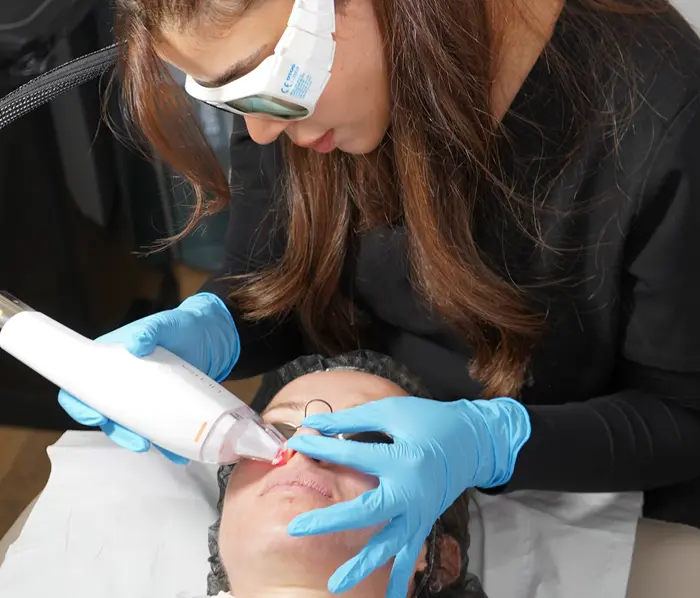
Improves scalp blood flow and how well PRP and exosomes absorb.
Learn more ›Book a consultation and get an honest, expert opinion. No pressure, no obligation, and open seven days a week.