
Tear trough filler restores volume where the under eye has hollowed, softening the shadow that makes you look tired. It is the most technique-sensitive area of the face, and not everyone is a candidate.
Real patient results from our London clinic. Brighter, more rested eyes without an obviously treated look.
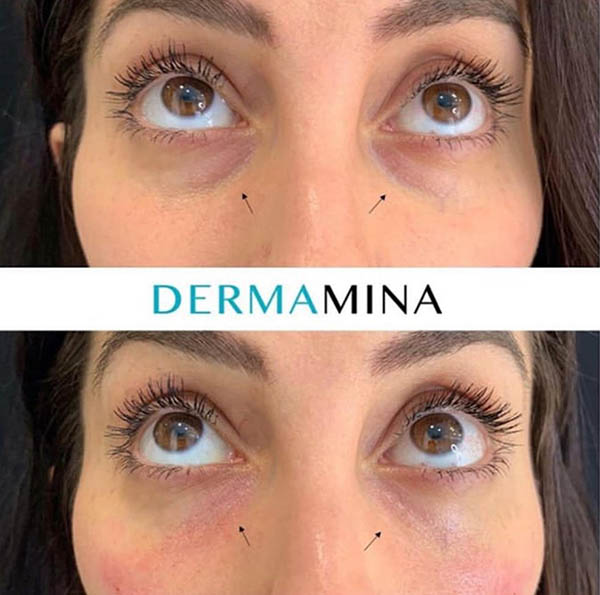
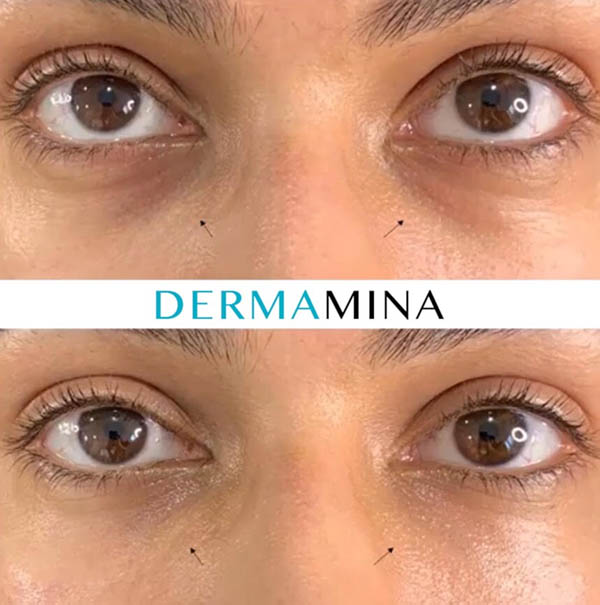
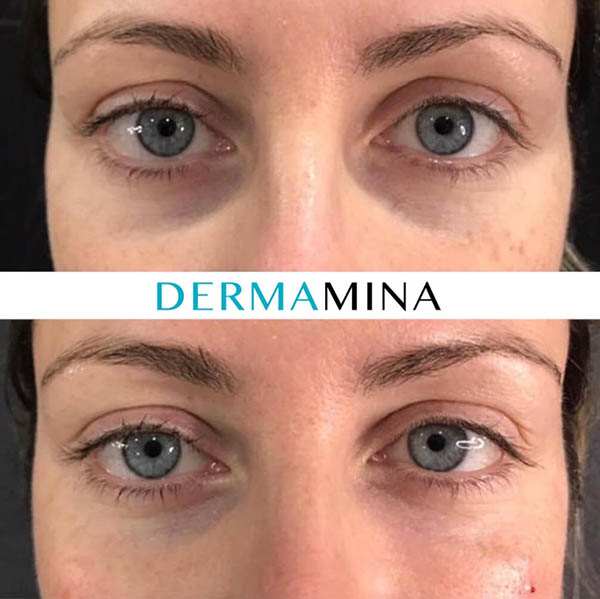
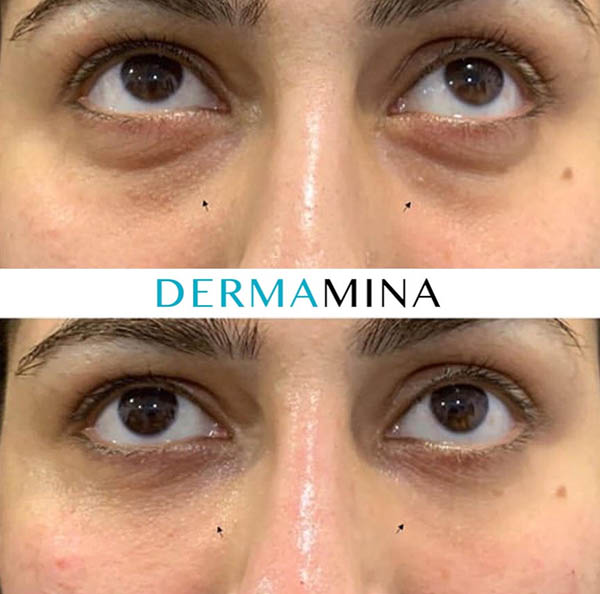
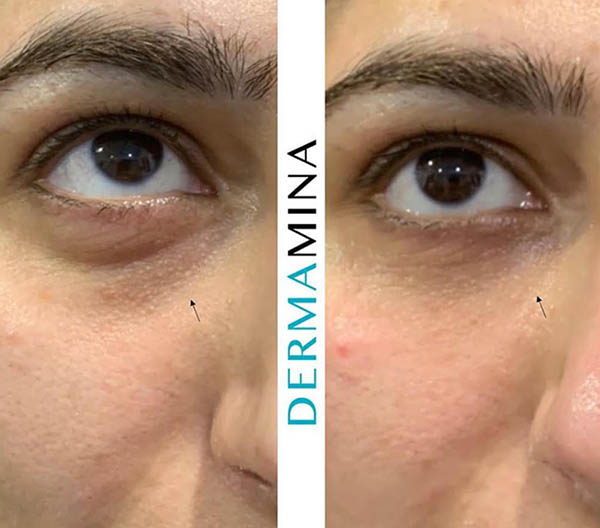
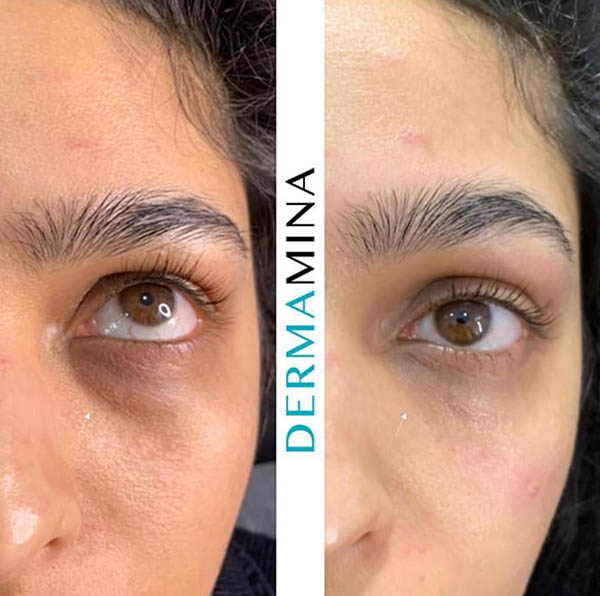
Results shown are a single treatment · Rated 4.9 / 5 from over 2,000 reviews
“I had been told elsewhere I could just have filler under my eyes. Mina explained why that would have looked puffy on me and treated my cheeks instead. My eyes look better and I did not even have the treatment I came in for.”
The tear trough is the groove that runs from the inner corner of the eye down along the top of the cheek. When it deepens, it casts a shadow, and that shadow is what most people are describing when they say they look tired.
Not all dark circles are the same problem, and this is the single most important thing to understand before booking. A shadow caused by a hollow is a volume problem, and filler placed beneath it will genuinely fix it. Pigmentation, where the skin under the eye is simply darker, is not a volume problem and filler will do nothing for it. Darkness caused by thin skin showing the blue of the vessels underneath is a skin quality problem, and again filler is the wrong tool.
Then there is puffiness. If your under eye is full rather than hollow, whether from fluid or from fat pads that have prolapsed forward with age, adding filler makes it worse rather than better. It is entirely possible to be both hollow in one place and puffy in another on the same face, which is exactly why this is assessed in person and in different lighting rather than from a photograph.
Where there is a genuine hollow, the correction is straightforward and the results are among the most satisfying in aesthetics. A small amount of firm filler placed deep against the bone rebuilds the platform that has been lost, the groove flattens, light stops catching it, and the shadow lifts. The change is often subtle in a mirror and obvious in photographs, which is the right way round.
The product matters more here than almost anywhere else. Under-eye skin is the thinnest on the body, so a soft, highly water-loving filler that works beautifully in lips will draw in fluid and leave a puffy, bluish ridge that can persist for a very long time. A firm, low-hydration filler placed deep is the correct choice, and it is why 'filler is filler' is a genuinely dangerous assumption in this area.
A large proportion of people who ask for tear trough treatment get a better result from the cheek. The two are structurally connected.
| Aspect | Tear Trough Filler | Cheek Filler |
|---|---|---|
| Where it goes | Deep in the under-eye hollow, against the bone. | Over the cheekbone and mid-face. |
| Fixes | A genuine hollow directly beneath the eye. | A flattened mid-face that is dragging the under eye down with it. |
| Right for | A clear groove with good skin quality and no puffiness. | Volume loss that starts at the cheek, where treating the eye alone would look odd. |
| Risk if wrong | Puffiness or a bluish tinge if overfilled or placed too superficially. | Heaviness if overdone, but a far more forgiving area. |
| How long | 12 to 18 months. | 12 to 18 months. |
| Price | £450. | From £300. |
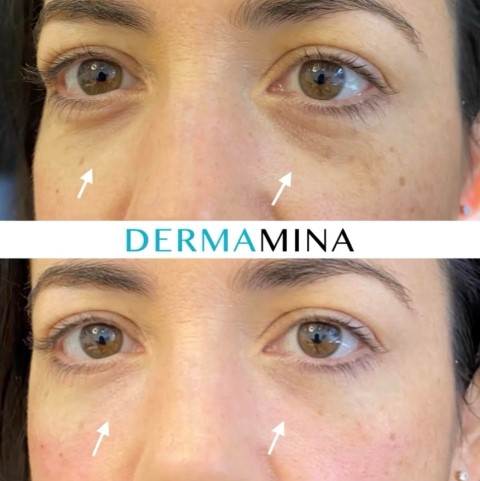
Tear trough is the treatment we decline more than any other, and that is deliberate. The under eye is unforgiving: the skin is under half a millimetre thick, the anatomy varies enormously between faces, and the consequences of getting it wrong last as long as the filler does, which can be well over a year. A puffy, blue-tinged under eye from badly placed filler is one of the hardest things to correct, and we see it walking through the door regularly.
So the consultation does real work. We look at whether the darkness is shadow, pigment or vessels. We check for puffiness and fluid retention, and ask about how it changes through the day. We assess the cheek, because a hollow under the eye is very often the top edge of a flattened mid-face and treating the eye alone would be treating the symptom. If your skin quality is the problem rather than volume, we would rather send you to polynucleotides or a skin treatment than sell you filler that cannot work.
Book nowA full assessment of the under eye and mid-face: is this shadow, pigment or vessels, is there any puffiness, and is the cheek contributing. We tell you honestly if you are not a candidate, and what would help instead.
Topical numbing cream is applied to the area and left to work fully before anything begins.
A small amount of firm filler is placed deep against the bone with a fine needle or cannula. It takes around 10 minutes.
You can go straight back to your day. Mild swelling or bruising is possible and settles within a few days. Avoid strenuous activity and sun for 24 hours and do not rub the area.
We review the result once everything has settled. This area is deliberately underfilled at the first pass, because adding a little more later is easy and taking it away is not.
It suits people with a genuine hollow under the eye and reasonable skin quality. Suitability here is narrower than for most treatments, and being assessed properly is the point of the consultation.
It is not right for everyone, and we turn people away for this more than any other treatment. Filler is the wrong answer if your darkness is pigmentation or visible vessels rather than shadow, if you have under-eye puffiness or prolapsed fat pads, if you retain fluid or have significant morning puffiness, or if your skin is very thin and lax. We will not treat you if you are pregnant or breastfeeding, or have an active infection in the area.
Not everyone is suitable for this treatment, and we will tell you at the consultation if you are not. Final pricing is confirmed at your free consultation, with no obligation to proceed.
Pay over 3, 6 or 8 months with Plim on treatments from £500. How our payment plans work

Every treatment is carried out in our Save Face accredited clinic on New Cavendish Street, five minutes from Oxford Street, by a medically qualified team.
It is a non-surgical treatment using dermal filler to restore volume in the hollow beneath the eye, reducing the shadow that reads as dark circles and tiredness. It is also called under-eye filler.
It depends entirely on what is causing them. If the darkness is a shadow cast by a hollow, then yes. If it is pigmentation in the skin or visible blood vessels showing through thin skin, filler will not help and we will tell you so at the consultation.
Around 10 minutes, including numbing.
Numbing cream is applied first and most patients report minimal discomfort.
No time off is needed. Mild swelling or bruising is possible and usually settles within a few days. Bruising is somewhat more likely here than in other areas because the skin is so thin.
Typically 12 to 18 months. The under eye moves less than areas like the lips, so filler tends to last well here.
At Dermamina it is £450 for both eyes, including the assessment. Your consultation is free.
The common reasons are puffiness or prolapsed fat pads rather than hollowing, darkness caused by pigment or vessels rather than shadow, significant fluid retention, or very thin and lax skin. A flattened cheek is another: in that case treating the cheek gives a better result than treating the eye.
Yes. Hyaluronic acid filler can be dissolved with hyaluronidase if the result is not what you wanted.
Swelling, bruising and tenderness are common and short-lived. The specific risks in this area are puffiness or a bluish tinge, known as the Tyndall effect, if filler is placed too superficially or too generously. Both are avoidable with the right product placed deep, and correctable by dissolving. Full risks are discussed at your consultation.
Avoid alcohol, aspirin and other blood-thinning medication for at least 24 hours beforehand to reduce bruising. Arrive with no eye makeup on.
Avoid strenuous exercise and strong sun for 24 hours and do not rub or press the area. Written aftercare is given at the appointment and emailed to you.
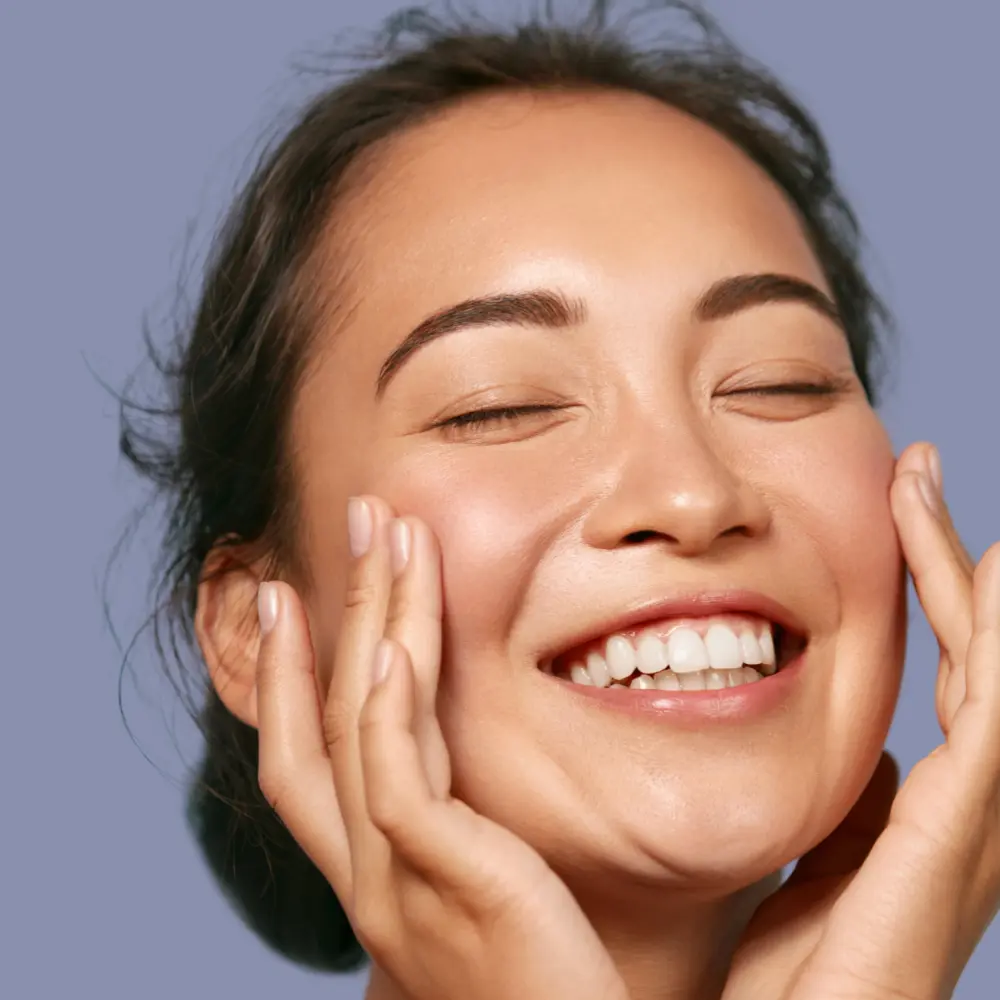
Improves under-eye skin quality and thickness, and is often the better option where filler is not suitable.
Learn more ›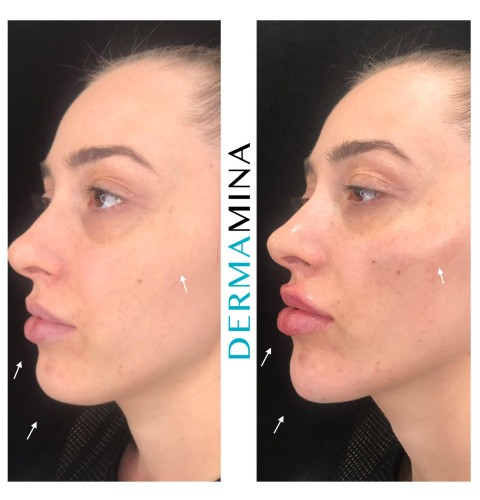
Restores the mid-face support that a hollow under eye often sits on top of.
Learn more ›
Hydrate and remodel skin quality across the face from within.
Learn more ›Book a consultation and get an honest, expert opinion. No pressure, no obligation, and open seven days a week.