
A gentle fractional laser that lifts pigmentation, softens acne scarring and rebuilds smooth, even skin. Safe for every skin tone, with barely any downtime.
Real patient results from our London clinic. Skin that looks clearer and more even, not resurfaced and raw.
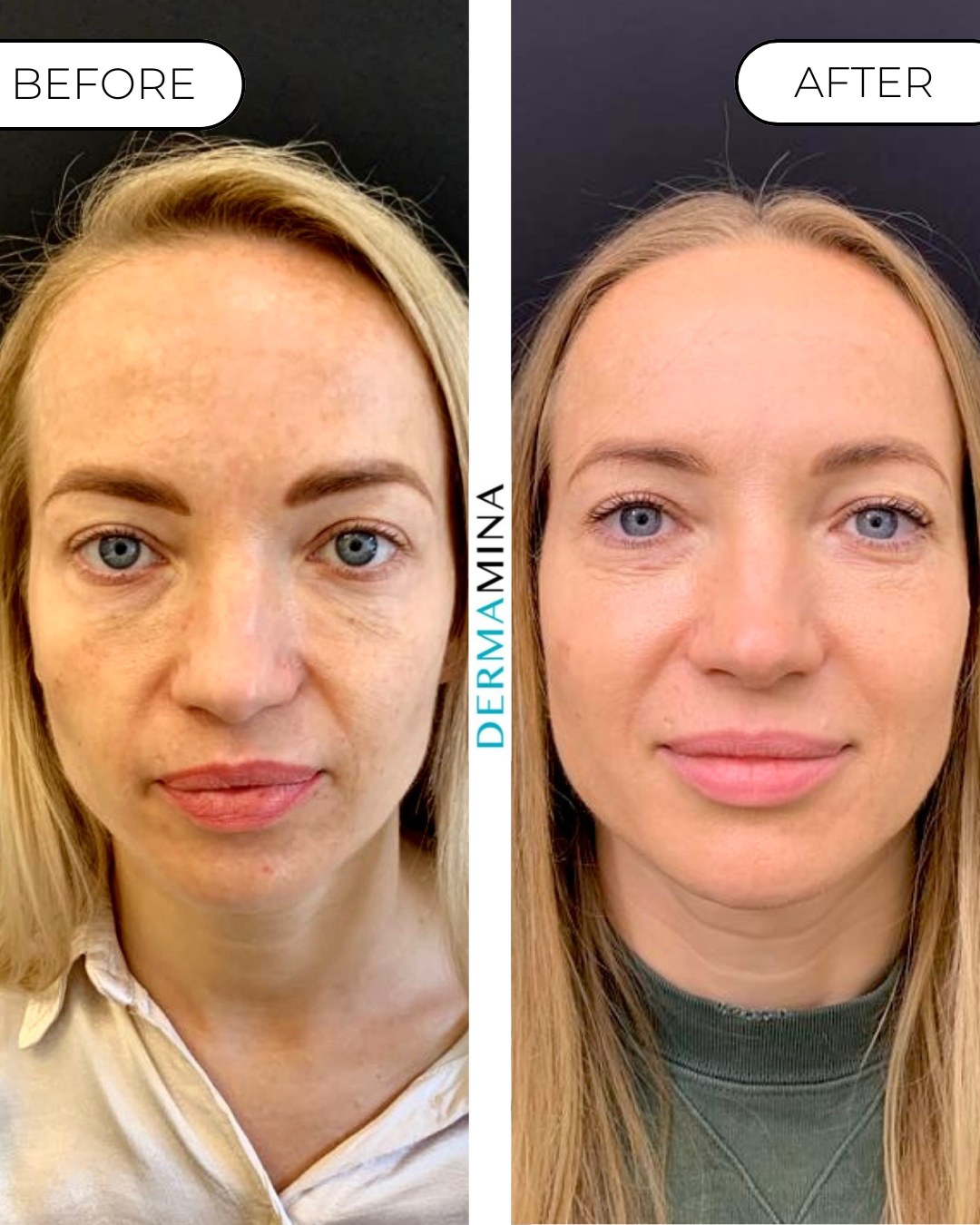
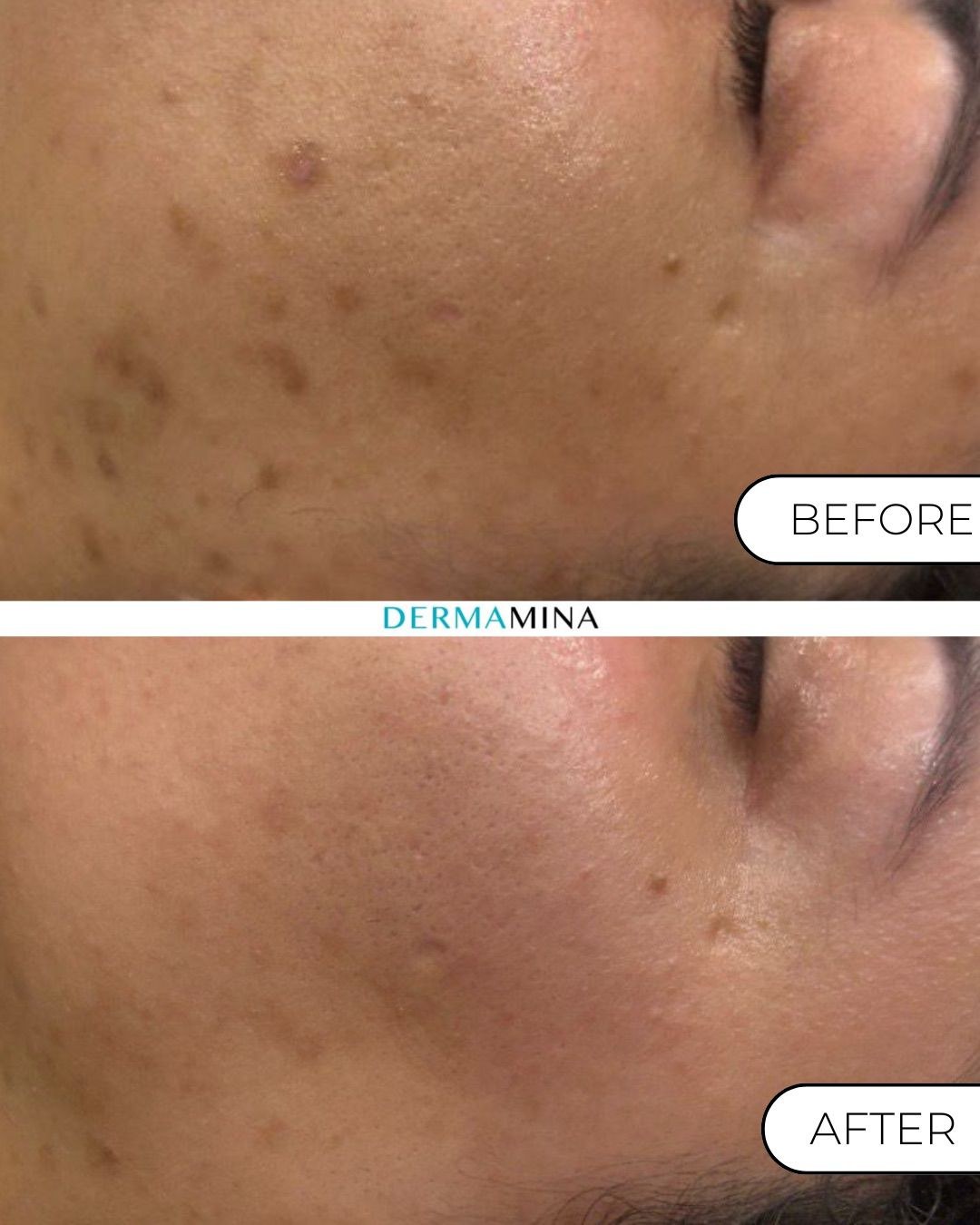
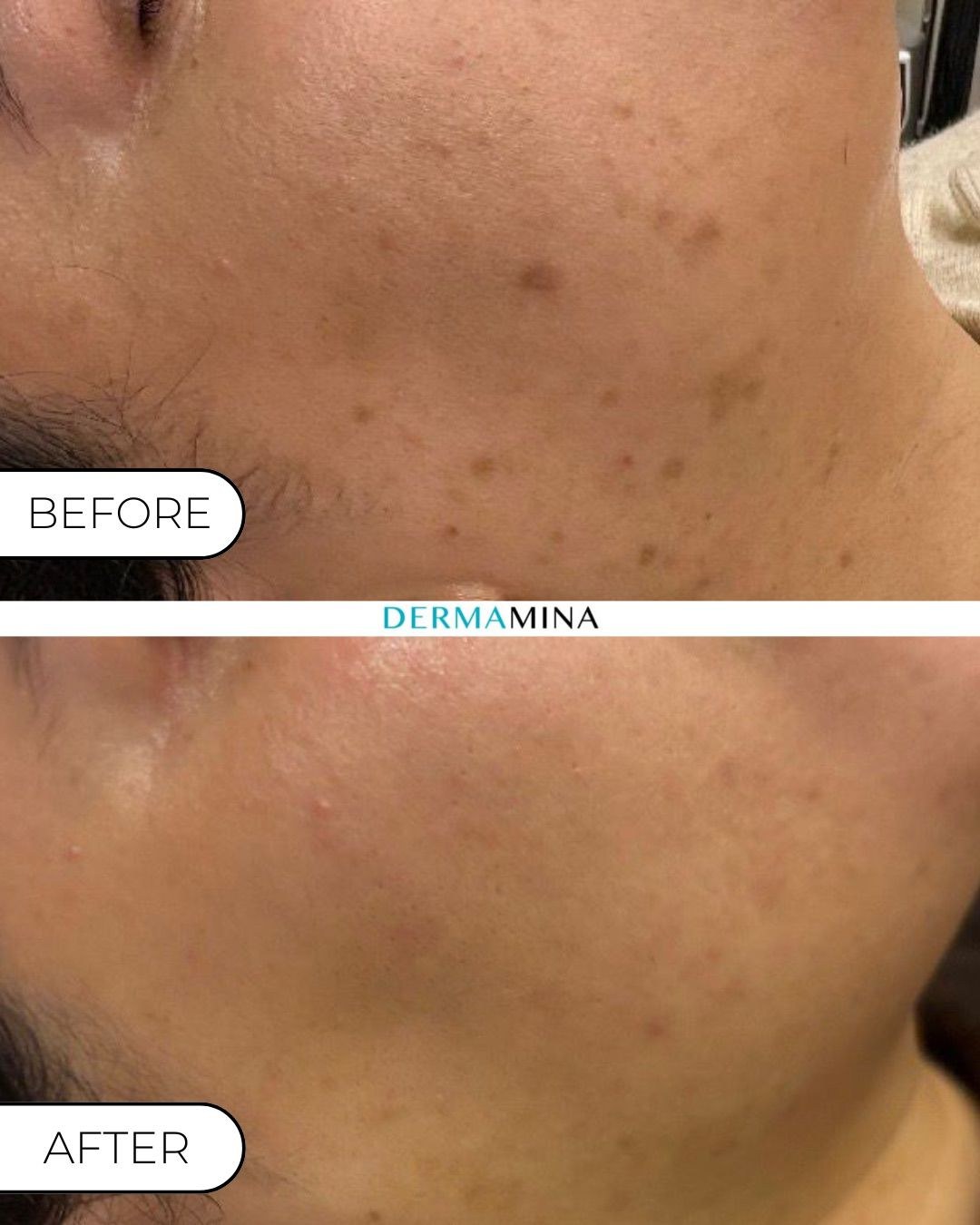
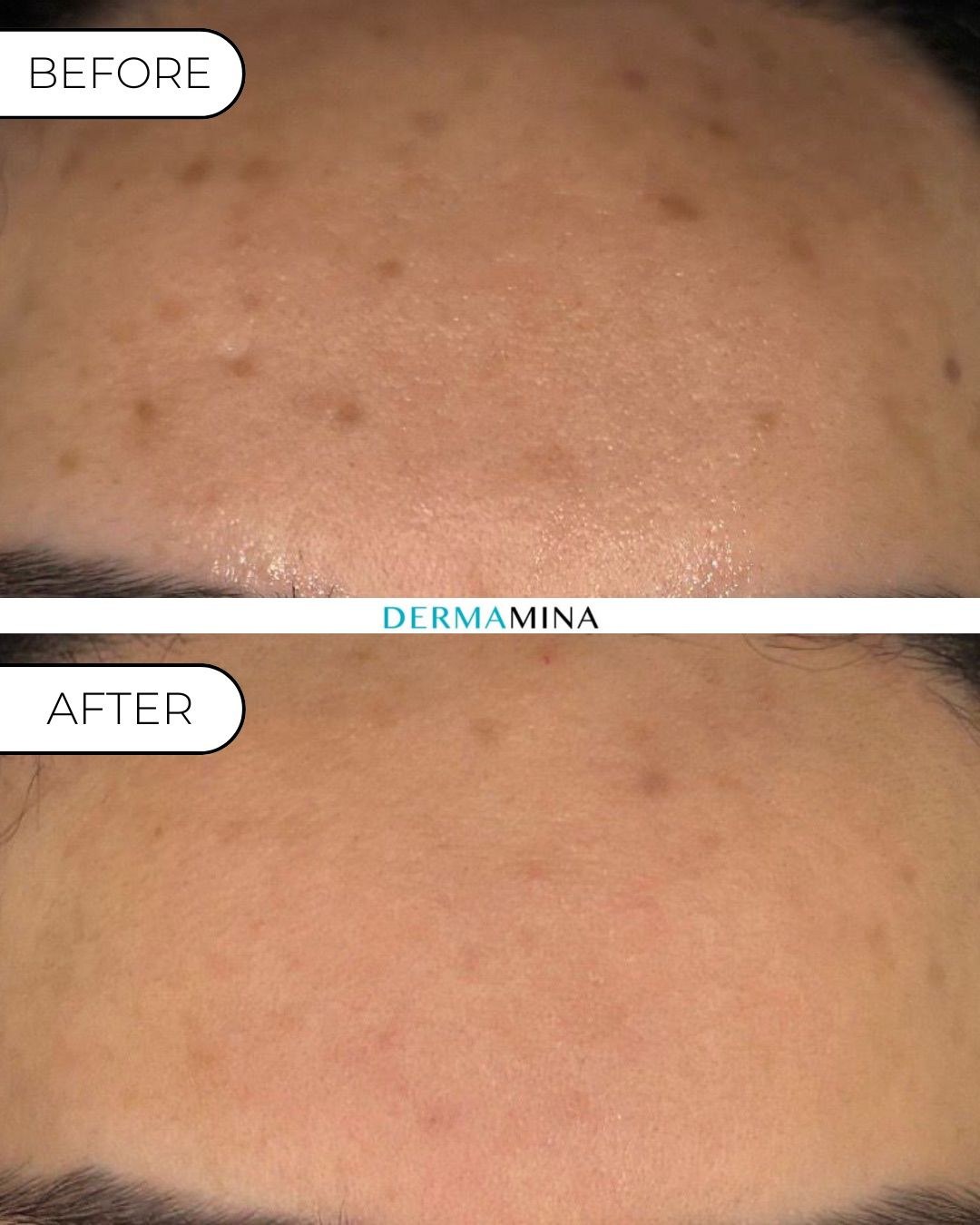
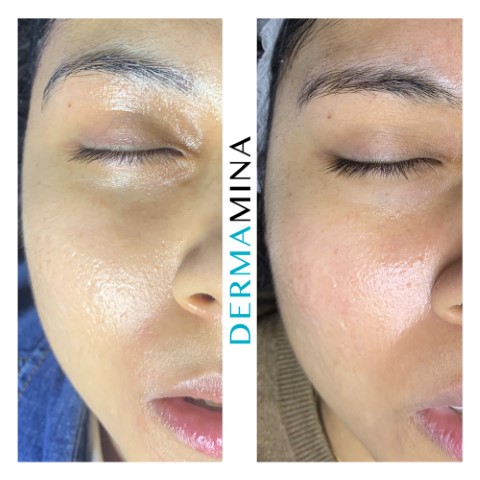
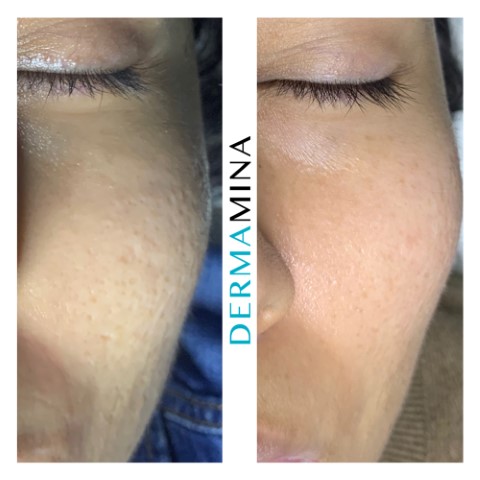
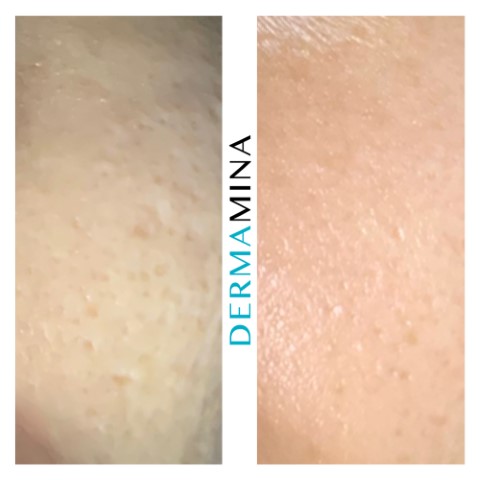
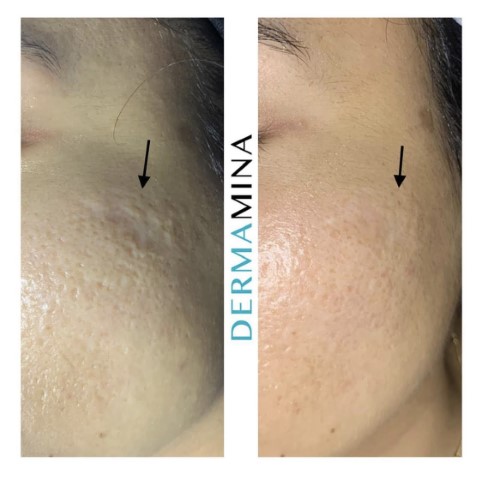
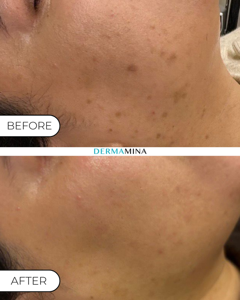
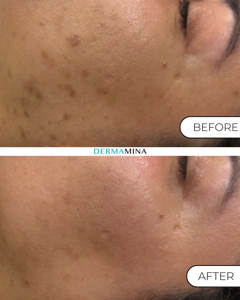
Areas shown include face, cheeks, forehead and jawline · Rated 4.9 / 5 from over 2,000 reviews
“My practitioner was informative and chatty. She worked quickly and let me know what she was doing all the way through my laser treatment. Although I have only had the first of three treatments I can already see the difference.”
LaseMD Ultra is a non-ablative fractional laser. It creates thousands of microscopic channels in the skin to trigger renewal, without damaging the surface.
Those microchannels do two jobs at once. They signal your skin to rebuild collagen and elastin, the proteins responsible for firmness and smoothness, and they open a temporary pathway for a targeted serum to absorb far deeper than it could through intact skin. That combination is why LaseMD works on tone and texture at the same time.
Because it is non-ablative, the surrounding tissue is left intact. That means faster recovery, less risk and far more comfort than traditional resurfacing lasers, which strip the top layer of skin and take weeks to heal. Most people are back at work the same day with nothing more than mild warmth and a faint sandpaper texture for a day or two.
It is also one of the few resurfacing lasers we can use confidently on deeper skin tones and all year round. At Dermamina every course starts with a skin assessment, and the energy, depth and serum are matched to your skin rather than run from a preset.
Watch a LaseMD Ultra session at Dermamina, from skin prep to the serum that follows.
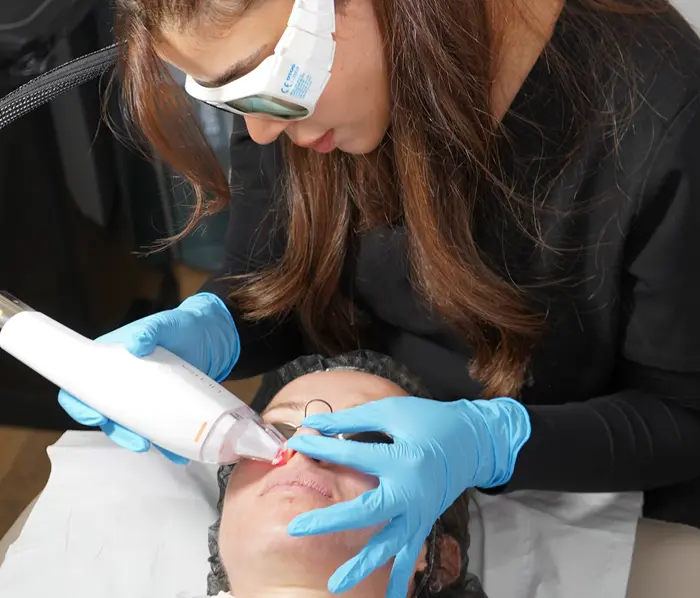
The video plays via YouTube when you press play.
Both resurface the skin. What differs is how much of it they take off to get there.
| Aspect | LaseMD Ultra (non-ablative) | Traditional ablative laser |
|---|---|---|
| How it works | Microscopic channels through the epidermis; the surrounding tissue is left intact. | Vaporises the full surface layer of skin so it heals back from underneath. |
| Downtime | Minimal. Mild redness and a light sandpaper texture for one to three days. | Significant. Days of raw, weeping skin and weeks of visible healing. |
| Skin tones | Suitable for all skin types and tones, including deeper skin. | Higher risk of post-inflammatory pigmentation in medium and deep skin tones. |
| Comfort | Numbing cream, then a sensation most people describe as warmth or tingling. | Considerably more painful, often requiring stronger anaesthesia. |
| Sessions | A course of 3 to 6, spaced 3 to 4 weeks apart, with results building throughout. | Usually one intensive session, with a long recovery attached. |
| Cost | From £350 per session, £315 per session on a course of 6. | Higher per session, and the downtime carries its own cost. |
Every clinic with a LaseMD device has access to the same laser. What changes the result is the assessment behind it: how much energy your skin can take, how deep to go, how many passes, and which serum is worth driving into those channels.
Push it too hard on pigmented skin and you can trigger the exact hyperpigmentation you came in to treat. At Dermamina the settings are chosen by an experienced clinician after assessing your skin, and adjusted between sessions as your skin responds.
Book nowWe assess your skin properly first: your concerns, your skin type and tone, your history and anything you are already using at home. From that we build a course, not a one-off, and tell you honestly what LaseMD will and will not fix.
Your skin is thoroughly cleansed and a numbing cream is applied, so you are comfortable before we start. This is also when we confirm the settings for your skin on the day.
The LaseMD handpiece passes over the treatment area, creating the microchannels. A serum selected for your concern goes on immediately afterwards, while absorption is at its highest. The whole thing takes 20 to 45 minutes depending on the area.
You leave with written aftercare and a plan for the next session. Expect mild redness and warmth for a day or two, keep SPF on daily, and skip actives and makeup for the first 24 hours.
LaseMD Ultra is suitable for all skin types and tones. It is one of the more versatile treatments we offer, which is why it appears in so many combined plans.
It is not the right treatment for everyone. If you are pregnant or breastfeeding, currently on isotretinoin, have an active skin infection in the area, or have recently been in strong sun, we will ask you to wait or suggest something else.
Courses of six are 10% off the single-session price. Final pricing is confirmed at your free consultation, with no obligation to proceed.

Every treatment is carried out in our Save Face accredited clinic on New Cavendish Street, five minutes from Oxford Street, by a medically qualified team.
LaseMD Ultra is a non-ablative fractional laser treatment that rejuvenates the skin from within. It gently resurfaces the skin, boosts collagen, and targets concerns such as acne, pigmentation, fine lines and uneven texture, without damaging the surrounding tissue.
Active acne and hormonal breakouts, acne scarring and post-inflammatory pigmentation, uneven tone, dullness and texture, sun damage, dark spots and melasma, fine lines, early ageing and enlarged pores, and hair thinning or scalp rejuvenation when paired with PRP or exosomes.
Most people benefit from a course of 3 to 6 sessions, spaced 3 to 4 weeks apart. Some see a difference after a single session, but the plan is always built around your skin rather than a fixed package.
You will usually notice smoother, brighter skin within a few days. The fuller benefits, firmer texture, clearer tone and fewer breakouts, build gradually over the following weeks as collagen rebuilds.
At Dermamina, LaseMD Ultra starts at £350 for one area. Two areas are £550 and three areas £750. A course of six is discounted by 10%, bringing one area down to £315 per session. Areas include face, neck, décolletage and hands; stomach and back each count as two areas.
Minimal. You may have mild redness or warmth for one to two days, and a light sandpaper-like texture or slight dryness for a few days. Most people return to work, social plans and light makeup the next day.
Yes. We apply a topical numbing cream first. Most people describe the sensation as a gentle warmth or tingling rather than pain.
Yes. Because it is non-ablative, we can treat all skin tones and types safely, and it can be used year round. The settings are adjusted for your skin tone and sensitivity, which matters more on deeper skin.
Slightly red or warm, sometimes with a faint grid-like pattern. That settles within 24 to 72 hours and leaves smoother, more radiant skin behind.
Yes, and it is often better that way. Because LaseMD temporarily increases how much your skin absorbs, it pairs well with exosomes, skin boosters, mesotherapy, biorevitalisers and vitamin infusions for the skin, and with PRP or exosomes for hair. Add-ons start at £80.
Side effects are usually short lived: temporary redness, dryness, sensitivity, mild swelling or light flaking. As with any laser there is a small risk of pigment change, which is why the assessment and settings matter. You receive full aftercare guidance to help you heal quickly.
Avoid direct sun for 7 days and wear SPF daily, use gentle hydrating skincare, skip makeup and active ingredients for the first 24 hours, stay well hydrated, and follow the tailored aftercare you are given at your appointment.
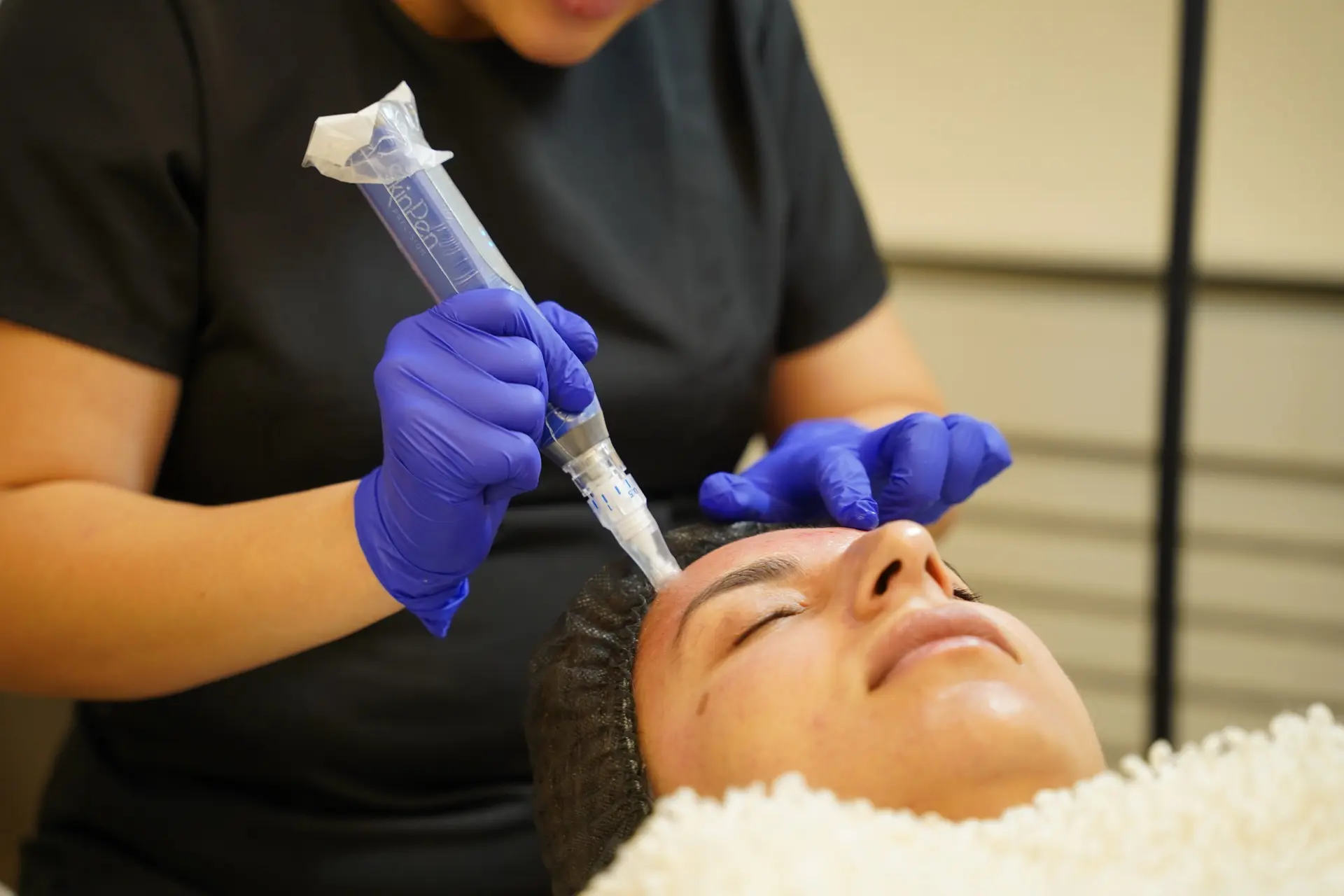
Boost collagen and improve texture and scarring with medical microneedling.
Learn more ›
Hydrate and remodel the skin from within with a bio-remodelling injectable.
Learn more ›
Our signature glow protocol for luminous, refined, even-toned skin.
Learn more ›Book a consultation and get an honest, expert opinion. No pressure, no obligation, and open seven days a week.